

CEO foreword

Chief Executive Officer
Cancer Australia
This year marks 20 years since Cancer Australia was established, and we are celebrating this milestone with a new name and fresh look for our newsletter: Cancer Verse: A national cancer update.
I am proud of what we have achieved together to improve outcomes for all Australians affected by cancer. Our focus now is implementing the Australian Cancer Plan, particularly addressing inequities across the cancer continuum for Aboriginal and Torres Strait Islander people and other priority populations.
This work is advancing through screening, culturally safe care, workforce development, research and stronger partnerships. Our story belongs to thousands of Australians working together, and I wholeheartedly thank our staff, partners, consumers, researchers, governments and the broader cancer sector for their remarkable contributions.
Cancer Australia celebrates 20 years and announces 2026 Jeannie Ferris Award recipients
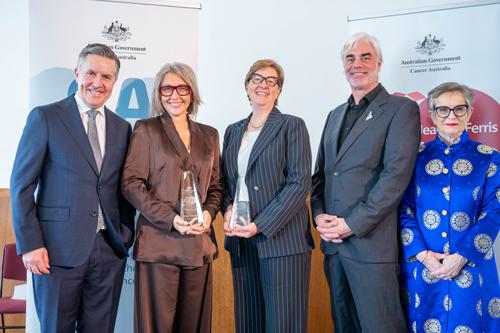
Cancer Australia marked 20 years of national leadership in cancer control with a combined celebration at Australian Parliament House in Canberra. The event recognised two decades of work to improve cancer outcomes for all Australians, and announced a new regional cancer leadership placement opportunity.
As part of the celebration, Cancer Australia also honoured Ms Kirralee Hughes and Dr Andrea Garrett as recipients of the 2026 Jeannie Ferris Award for their outstanding contributions to improving equity in cancer outcomes.
Ms Kirralee Hughes has been recognised in the Members of the Community category. A brain cancer advocate and co-founder of the Mark Hughes Foundation, she has helped improve support for people affected by brain cancer, including through care coordination services for patients and families in regional and rural communities. Her leadership has helped the Foundation raise more than $30 million for brain cancer research.
Dr Andrea Garrett has been recognised in the Health Professionals and Researchers category. A leading gynaecological oncologist, she has worked to improve access to high-quality cancer care for women across Queensland, particularly in rural, remote and underserved communities. Dr Garrett established the Queensland Trophoblast Centre and has championed innovative, culturally safe models of care for Aboriginal and Torres Strait Islander women.
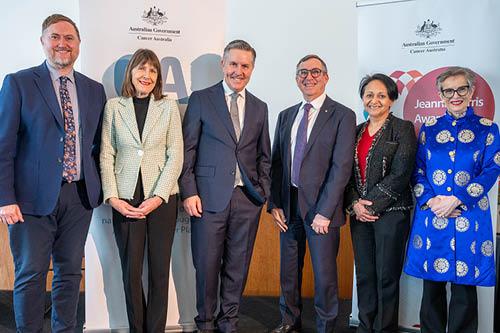
The new supported placement initiative for rural, regional and remote health service leaders will be delivered through the Australian Comprehensive Cancer Network (ACCN) in partnership with Chris O’Brien Lifehouse and Peter MacCallum Cancer Centre. Two supported six-week placements will be offered in 2026-27, providing recipients with access to expertise from two of Australia’s leading comprehensive cancer centres.
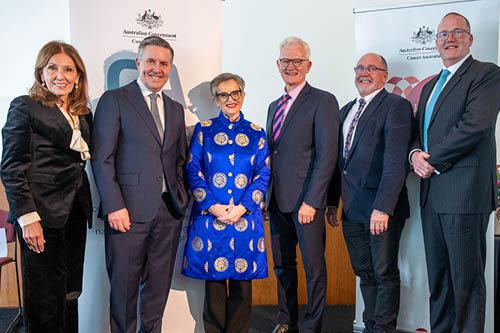
The celebration brought together many of those who have shaped Cancer Australia, including current and former Chief Executive Officers, Professor Dorothy Keefe PSM, Professor David Currow and Professor Helen Zorbas AO; current and former Cancer Australia Advisory Council Chairs, Associate Professor Chris Milross and Dr William Glasson AO; Advisory Council members; parliamentarians; and cancer sector stakeholders including Chris O’Brien Lifehouse CEO Professor Michael Boyer AM and Peter MacCallum Cancer Centre CEO Professor Jason Payne.
Guests included Minister for Health and Aged Care, the Hon Mark Butler MP, Assistant Minister for Health and Aged Care, the Hon Rebecca White MP, Senator Anne Ruston, Professor Tom Calma AO, Professor Lisa Whop and long-serving staff members Caroline Nehill, Katrina Anderson and Professor Vivienne Milch. Mr Jeremy Ferris, son of the late Senator Jeannie Ferris, also attended, honouring her enduring legacy of improving cancer outcomes and advancing equitable care.
Attendees reflected on Cancer Australia’s achievements over the past 20 years and reaffirmed their shared commitment to better outcomes for all Australians. Read Minister Butler's Media Release here.
Movember Pan Cancer Initiative – National Reporting for PREMs and PROMs
The Australian Real World Cancer Evidence Network (Pan Cancer Initiative) is a partnership between Movember, Cancer Australia and the Department of Health, Disability and Ageing.
The Pan Cancer Initiative aims to optimise cancer care for all Australians by embedding patient-reported experience and outcome measures, known as PREMs and PROMs, across the cancer sector.
Integrating PREMs and PROMs in national performance monitoring and reporting is an important goal under the Australian Cancer Plan and National Cancer Data Framework. This work will help build the evidence base needed to improve person-centred cancer care and outcomes at both individual and system levels.
PREMs and PROMs collection and use across the cancer sector is deeply fragmented. Organisations collect information using a variety of different tools, leading to challenges in reporting patients' perspectives at a national level.
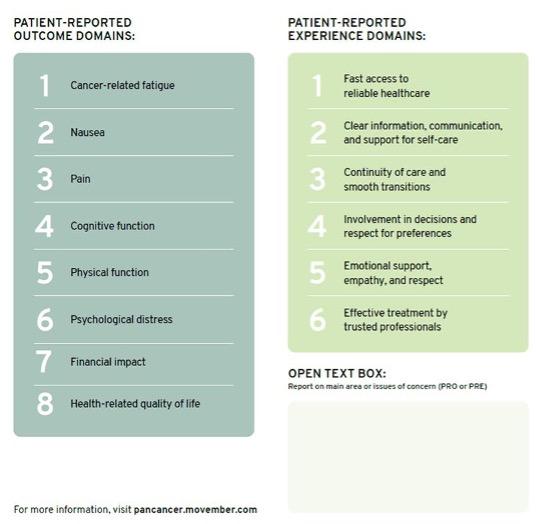
The Pan Cancer Initiative, in collaboration with Flinders University, employed a modified Delphi process to build consensus among clinicians, people with lived experience and other key stakeholders across the cancer care sector on the most important outcome and experience domains to be collected and reported. This ensures what matters most to people affected by cancer continues to be a priority.
This process culminated in a nationally agreed Core Outcome Set. The Core Outcome Set is designed to allow collection of information using diverse PREMs and PROMs, while still supporting consistent data collection for national reporting. An online toolkit to support adoption will be released later in the year.
The Core Outcome Set, and subsequent recommendations and toolkit, marks a significant milestone for improved benchmarking, data interoperability and national reporting, a priority of the National Cancer Data Framework. It also supports the routine use of patient-reported measures in clinical care and helps ensure that cancer services remain focused on the experiences and outcomes that matter most to people affected by cancer.
Connecting cancer care: ACCN and Optimal Care Pathways
Optimal Care Pathways (OCPs) are central to the Australian Cancer Plan (the Plan), reflecting their importance as national standards of care that support high-quality, patient-centred care and improved outcomes for all Australians affected by cancer.
Cancer Australia supports the sector by leading the policy approach for OCPs through ongoing implementation of the National Optimal Care Pathway Framework (OCP Framework). Developed in 2024, the OCP Framework provides a standardised national approach to developing, updating, adapting, evaluating and embedding OCPs into routine cancer care. We work with the sector to ensure new and updated OCPs align with the OCP Framework.
Our role includes providing guidance and leadership to improve awareness and functionality of OCPs for health professionals, health services and consumers.
Activities currently underway to implement the OCP Framework, in collaboration with the sector, include:
- Digitising OCPs through a central OCP Hub which will allow users to layer multiple OCPs (for example, a cancer-type OCP with a population-based OCP) and improve navigation through enhanced search functionality and AI.
- An OCP awareness campaign targeted at health professionals to increase awareness and uptake of OCPs following the launch of the OCP Hub.
- Establishing national cancer control indicators to assess OCP adherence, aligned with the National Cancer Data Framework.
- Enhancing OCP Step 2 (Presentation, initial investigations and referral) to support general practice in early diagnosis through developing guidance on the investigation of common symptoms, signs and test results associated with cancer.
- Developing new OCPs for priority populations:
- People with rare and less common cancers
- Children with cancer
- LGBTIQA+ people with cancer
- People with disability with cancer
- People living in rural and remote areas with cancer.
Together these activities contribute to delivery of the Australian Cancer Plan and the OCP Framework by improving the relevance, accessibility, visibility and accountability of OCPs.
For more information, visit Optimal Care Pathways | Cancer Australia or contact OCPs@canceraustralia.gov.au.
The Australian Comprehensive Cancer Network (ACCN) was launched by the Australian Government in May 2024 as an early implementation priority of the Australian Cancer Plan.
The ACCN is a national, virtual network that connects cancer services across Australia. It brings together local health services, existing networks and alliances, Comprehensive Cancer Centres and other specialist providers to strengthen collaboration, share expertise, and support access to high-quality, coordinated cancer care for all Australians.
Since its launch, the ACCN has established a growing national network for collaboration and knowledge sharing across the cancer sector, including:
- ACCN Innovation Showcase – an annual national event which highlights innovative initiatives, partnerships and models of networked cancer care. The Showcase has become a key platform for sharing outcomes from partnerships, cross service collaborations, and models of care that demonstrate networked comprehensive cancer care across diverse settings. The third Showcase was held in Adelaide in September 2026, preceded by the first National Cancer Data Framework Symposium.
- The ACCN Discussion Forum – an online community supporting more than 1,500 members to connect, collaborate, and share knowledge.
- Networked Comprehensive Cancer Care – Regional, rural and remote workshops bring together cancer care clinicians, service providers and stakeholders to identify opportunities to strengthen connections between regional services, metropolitan centres and Comprehensive Cancer Centres. More than 80 stakeholders participated in the first workshop in Dubbo, and over 40 attended the second workshop in Cairns. An additional regional workshop and a national online workshop are planned for 2027.
- The Networking for Cancer Equity Grant Program – supporting activation of the ACCN and strengthening collaboration across the cancer sector. Through the inaugural funding round, eight recipients are sharing nearly $1.8 million to improve access to coordinated, high-quality cancer care in outer metropolitan, regional, rural and remote communities.
For more information about the ACCN, visit: Australian Comprehensive Cancer Network | Cancer Australia
The Australian Cancer Plan evaluation
The Australian Cancer Plan (the Plan) was launched in November 2023, as a once-in-a-generation reform agenda to improve cancer outcomes and experiences for all Australians, particularly for people experiencing poorer health outcomes.
Achieving equity in cancer outcomes is a fundamental measure of success for the Plan and aligns Australia with global efforts to improve cancer outcomes for all people. The Plan was developed through an extensive and rigorous process of stakeholder engagement, including two public consultations, targeted engagements, stakeholder workshops, and a public webinar series. Feedback and advice from over 400 organisations and 300 individuals across Australia and across the cancer control continuum informed the Plan’s priorities for reform in cancer care over the next decade and beyond.
Partnerships are a key mechanism for delivering the Plan. As of September 2026, there were 41 Australian Cancer Plan Implementation Partners working with Cancer Australia to undertake activities aligned to Plan priorities and support collective action across the cancer control sector. Learn more about the Australian Cancer Plan Implementation Partnerships here.
Since the release of the Australian Cancer Plan, Cancer Australia has developed key foundations to support implementation, including the National Cancer Data Framework, the National Optimal Care Pathways Framework, the National Framework for Genomics in Cancer Control, the Australian Comprehensive Cancer Network and a suite of complementary Aboriginal and Torres Strait Islander-led initiatives.
Cancer Australia has recently completed an evaluation of the Australian Cancer plan to assess implementation progress at the 2-year mark and identify early system-level changes across the cancer control sector.
The evaluation found the Plan is supporting greater alignment and collaboration across the cancer sector, particularly at leadership and system levels. Findings from the evaluation will support continuous improvement and guide future implementation priorities. Further information on the findings and opportunities is available on the Plan webpage.
Australian Government investment to bring international clinical trial access to Australia, for childhood cancer
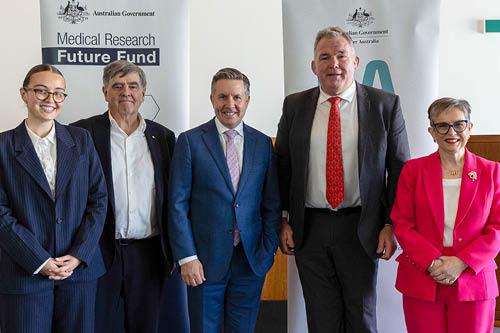
The Australian Government has announced the first investment under the $300 million Medical Research Future Fund Australian Cancer Research Program, supporting Australian participation in international CAR-T clinical trials for children and young people with cancer.
The Government will provide $5 million over five years from 2027–28 to support participation in the LifeArc Worldwide CAR-T Pathfinder Trial and Paediatric Cell Therapy Accelerator. The investment will help build international CAR-T clinical trial capability in Australia and give more families the opportunity to access promising therapies closer to home.
The Australian Cancer Research Program is a landmark 10-year investment designed to strengthen and coordinate cancer research nationally. It includes the Childhood, Adolescent and Young Adult Cancer Mission, which is focused on improving outcomes and experiences for Australians aged up to 24 years affected by cancer.
The grant opportunity responds to priorities identified in Cancer Australia’s Childhood, Adolescent and Young Adult Cancer Roadmap, released earlier this year as a national framework to guide coordinated action across care, research and support.
Cancer Australia CEO Professor Dorothy Keefe said the announcement demonstrated early progress in implementing the Roadmap and creating a more connected national childhood and young adult cancer system.
Minister for Health and Ageing the Hon Mark Butler MP said the investment would bring world-class trials closer to home and could reduce the financial and emotional burden on families who might otherwise need to travel overseas for treatment.
Professor Brendan Murphy AC, Chair of Children’s Cancer CoLab, welcomed the investment in new treatment options and its potential to support access to novel therapies and best-practice models of care.
The Kids’ Cancer Project CEO Owen Finegan highlighted the importance of a collaborative, whole-of-sector approach that brings together government, charities, clinicians, researchers, advocates and people with lived experience.
The MRFF Australian Cancer Research Program grant opportunity is forecast to open in June 2027. Further research priorities and funding intentions will be announced in the coming months. Read Minister Butler's Media Release here.
Leadership Group on Aboriginal and Torres Strait Islander Cancer Control
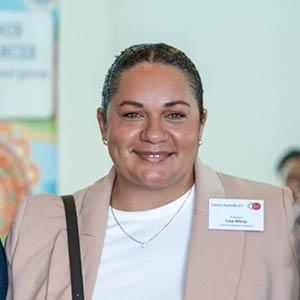
Chair of The Leadership Group on
Aboriginal and Torres Strait Islander
Cancer Control.
One of Cancer Australia’s most enduring achievements has been establishing the Leadership Group on Aboriginal and Torres Strait Islander Cancer Control. Since its founding in 2016, the Leadership Group has enabled Aboriginal and Torres Strait Islander leaders, community representatives, researchers, policymakers, clinicians and peak organisations to provide leadership in Aboriginal and Torres Strait Islander cancer control to directly shape national cancer policy, priorities and reform.
The significance of the Leadership Group extends beyond advisory functions. It is the mechanism through which a shared national agenda for Aboriginal and Torres Strait Islander cancer control is designed and implemented.
The Group has shaped national policy and reform through championing implementation of the National Aboriginal and Torres Strait Islander Cancer Framework, informing equity-focused actions under the Australian Cancer Plan, identifying emerging issues in cancer control and fostering cross-sector collaboration to improve cancer outcomes at the system, service and community levels.
Its guidance continues to inform major initiatives to strengthen partnerships across the cancer sector, and ensure Aboriginal and Torres Strait Islander voices remain central to the design, delivery and evaluation of initiatives to improve cancer outcomes.
Indigenous leadership driving national cancer control
Over the past 20 years, Cancer Australia has helped elevate Aboriginal and Torres Strait Islander cancer control from a specific program area to a national priority embedded across Australia’s cancer system.
The National Aboriginal and Torres Strait Islander Cancer Framework and the Australian Cancer Plan have embedded equity, Indigenous leadership, co-design and partnerships in national cancer policy. The Leadership Group on Aboriginal and Torres Strait Islander Cancer Control provides an enduring mechanism for shared decision-making and ensures Aboriginal and Torres Strait Islander voices inform priorities, planning and reform.
Cancer Australia continues to translate policy into action through the Improving First Nations Cancer Outcomes budget measure. Investment through the Partnerships for culturally safe cancer care grant program, Partnerships for Cancer Research grant program and First Nations Cancer Scholarships program is strengthening culturally safe care, partnerships with Indigenous-led organisations, the Aboriginal and Torres Strait Islander cancer workforce and capacity for Indigenous-led research.